How to Winterize Your Pipes in Littleton Before a Freeze
Littleton's first hard freeze usually hits in October. Here's how to winterize your pipes before it does - and what to do if one bursts anyway.
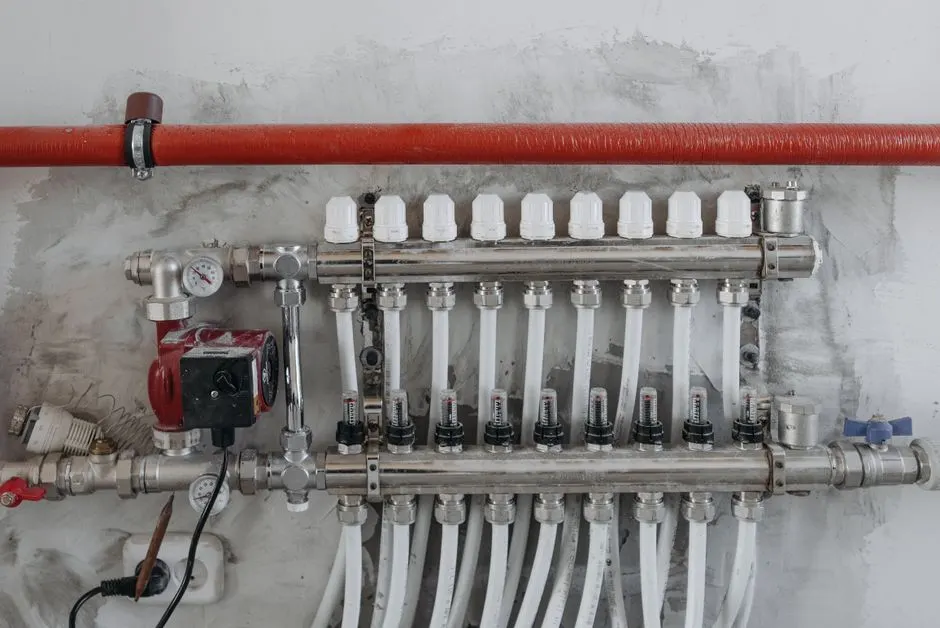
You winterize pipes in Littleton by shutting off and draining outdoor spigots, insulating every pipe that runs through an unheated space, sealing crawlspace and rim-joist gaps, and keeping cabinet doors open on exterior-wall sinks during hard freezes. Do that before the first overnight low drops below 20°F - which in Littleton typically happens in mid-to-late October. Water expands about 9% when it freezes, and that expansion is what splits copper, PEX, and even galvanized steel. The rest of this guide walks through the exact sequence, the products that hold up in Colorado's freeze-thaw cycles, current 2026 pricing, and what to do when a pipe bursts anyway.
Why Littleton Pipes Freeze So Fast
Littleton sits at roughly 5,400 feet, and that elevation is the whole story. Air is thinner up here, so it holds less heat and radiates what's left away faster after sunset. A 28°F night in Denver can leave pipes fine; the same 28°F in a Littleton crawlspace at 5,400 feet will freeze a half-inch copper line in four to six hours.
The other factor is our soil. Front Range clay expands and contracts hard with each freeze-thaw cycle, and that movement is what cracks the supply line running from your meter to the house. Most of the frozen-pipe calls we run in January started as a hairline crack in November.
Then there's the housing stock. Homes in Historic Downtown Littleton and along the older blocks near Sterne Park were built between 1900 and 1960, back when exterior hose bibs were often just a pipe stub through the foundation with no frost-free valve. Those are the first to freeze every year. Newer builds out toward Roxborough and Ken Caryl have frost-free spigots and better insulation, but they have their own weak points - long PEX runs through unconditioned garages and attic chases that nobody thinks to check.
If you want a sense of how seriously we take this locally, our team handles plumbing services Littleton CO year-round, and roughly a third of our winter emergency calls come from pipes that were never winterized at all.
When Should You Winterize Your Pipes in Littleton?
Winterize by mid-October in Littleton. The average first freeze at this elevation lands between October 10 and October 20, and the first hard freeze - 24°F or below for four or more hours - usually arrives in the first week of November.
Here's the rough calendar we work from:
- Late September: disconnect garden hoses, drain and store them. A hose left connected traps water in the spigot and that's the single most common cause of a split bib.
- Early-to-mid October: shut off interior valves feeding exterior spigots, open the spigots to drain, and blow out sprinkler lines. If your irrigation system has a backflow preventer, that gets drained too.
- Mid-to-late October: insulate exposed pipes in crawlspaces, garages, and along rim joists. Seal foundation vents and any gap where pipes penetrate the exterior wall.
- November through March: during any stretch where the overnight low is forecast below 20°F, open cabinet doors under exterior-wall sinks and let a pencil-thin stream drip from the faucet furthest from the water heater.
If you're leaving town for the holidays, don't skip this. We've walked into more than a few Littleton homes in January where a pipe let go on day three of a two-week trip and the damage ran into five figures.
How Do You Winterize Pipes in Littleton CO? A Step-by-Step Walkthrough
Work through these in order. The whole job takes most homeowners two to three hours the first year and about 45 minutes every year after.
1. Shut off and drain every exterior spigot
Find the interior shutoff valve for each hose bib - usually a gate or ball valve in the basement or crawlspace directly behind the spigot. Close it, then go outside and open the spigot to let the trapped water drain. Leave the outdoor spigot open through winter. If you can't find an interior shutoff, you either have a frost-free bib (fine) or you have a problem (call us).
2. Blow out the sprinkler system
Rent or borrow a compressor rated for at least 20 CFM and blow each zone until nothing but air comes out. Skip this and the backflow assembly is the first thing to crack - a $250 part plus labor, versus $75 to $125 for a professional blowout.
3. Insulate every exposed pipe
Focus on crawlspaces, unheated garages, attic runs, and any pipe within 12 inches of an exterior wall. Foam pipe sleeves (the tubular kind, not the cheap spiral wrap) run about $1.50 to $3 per linear foot at any Littleton hardware store. For pipes in a genuinely cold crawlspace, add heat tape rated for potable water and plug it into a GFCI outlet.
4. Seal the building envelope
Cold air finds every gap. Foam-seal or caulk around pipe penetrations through the foundation and rim joist. Close foundation vents with rigid foam board cut to fit - you can pull them in April. A $20 tube of spray foam in October beats a $4,000 repair in January.
5. Insulate the water heater and any exposed tank lines
An insulated blanket on an older tank water heater keeps it from working overtime in a cold garage. If your water heater is on its last legs anyway, this is a good moment to price out water heater installation Littleton CO before the cold snap forces the decision.
6. Know where your main shutoff is
Walk the house and find the main shutoff valve today, not at 2 a.m. in a foot of water. Tag it with a zip tie or a piece of red tape. Show every adult in the house.
Pipe Insulation in Littleton Colorado: What Actually Works
Not all pipe insulation is created equal, and the cheap stuff fails here. Standard closed-cell foam sleeves carry an R-value around 3.5 to 4 per inch. That's enough for a pipe in a heated basement. It is not enough for a pipe running through a 15°F crawlspace.
For genuinely cold spaces, you want one of these:
- Fiberglass pipe wrap with a vapor barrier - R-4 to R-8 depending on thickness, but it must be sealed or it traps moisture and rusts the pipe.
- Self-regulating heat cable - draws 3 to 8 watts per foot, thermostatically controlled, and the only real solution for a pipe that sees sustained sub-freezing air.
- Pre-formed foam with a slit and peel adhesive - the easiest DIY option, but you must seal every joint with matching tape or the cold air gets in anyway.
One more thing: insulation slows heat loss, it does not generate heat. A pipe that's already at 28°F stays at 28°F under a foam sleeve. If your crawlspace is that cold, you need heat tape or you need to close the crawlspace off from the outside air.
We see this constantly in the older homes around Plumber Littleton CO in Historic Downtown Littleton, where unheated basements and 1920s plumbing layouts leave supply lines running along exterior walls. Those houses need heat tape, not foam sleeves.
What to Do If Your Pipes Freeze in Littleton
If a pipe freezes in Littleton, shut off the main water valve first, then open the nearest faucet and thaw the pipe slowly with a hair dryer, heat gun on low, or wrapped towels soaked in hot water. Never use an open flame. Never pour boiling water directly on a frozen line. Both cause thermal shock and turn a frozen pipe into a burst pipe.
Here's the sequence:
- Shut off the main water supply.
- Open the closest faucet so melting water has somewhere to go and pressure has somewhere to escape.
- Apply gentle heat starting at the faucet end and working back toward the frozen section.
- Watch for the moment water starts flowing - that's when you know you're through.
- Once flow is restored, check every joint and fitting along that run for weeping. A pipe that froze often cracked and won't show it until it thaws.
If you turn the main back on and hear water running where it shouldn't, shut it off immediately and call us. Our burst pipe repair Littleton CO team runs same-day calls through the winter, and we can usually stop the water and start the repair within a couple of hours of your call.
Common Winterization Mistakes We See Every Year
These are the ones that cost Littleton homeowners the most money, in roughly the order we encounter them.
- Leaving the garden hose connected. Water trapped between the hose and the spigot has nowhere to expand. This alone accounts for a huge share of our November calls.
- Insulating without sealing. Foam sleeves over a pipe in an open crawlspace do almost nothing if the crawlspace vents are still open. Seal the envelope first.
- Forgetting the pipe that runs to the garage. If you have a hose bib or utility sink in an unheated garage, that line freezes before anything else in the house.
- Turning the heat down too far while traveling. Setting the thermostat to 50°F is fine. Setting it to 45°F or off is not - interior walls near exterior corners can drop below freezing.
- Using a torch to thaw a pipe. We've seen this start two house fires in the metro in the last five years. Don't.
- Assuming PEX is freeze-proof. PEX flexes more than copper, but it still splits at the fittings. It is not immune.
When to Call a Professional
Call a plumber if you can't find the interior shutoff for an exterior spigot, if you've had a pipe freeze in the same spot two winters running, if your crawlspace has standing water or obvious cold-air infiltration, or if a pipe has already burst.
We also handle the jobs that are just easier to hand off - sprinkler blowouts, adding frost-free spigots, running heat tape on a long crawlspace line, and replacing a section of pipe that's already cracked. If you're not sure whether your setup needs work, we'll walk the house with you and tell you straight. Many homeowners we help with drain cleaning Littleton CO end up asking us to do a winterization walkthrough at the same time, and it usually takes under an hour.
One thing we hear a lot from folks in the newer neighborhoods out toward Plumber Littleton CO in Roxborough is that they assumed a 2015 build wouldn't have freeze issues. Long PEX runs through unconditioned attic space prove otherwise every January.
Frequently Asked Questions
How do I winterize my pipes in Littleton CO?
Shut off and drain exterior spigots, blow out the sprinkler system, insulate exposed pipes in crawlspaces and garages, seal foundation vents and pipe penetrations, and locate your main shutoff. Most homes take two to three hours the first year and about 45 minutes annually after that.
When should I winterize my pipes in Littleton?
By mid-October. Littleton's average first freeze falls between October 10 and October 20, and the first hard freeze typically arrives in early November. If you miss that window, winterize anyway - a pipe that survives one cold snap is still at risk the next one.
How do I prevent pipes from freezing in Littleton?
Insulate every exposed pipe, seal cold-air gaps around penetrations and foundation vents, keep cabinet doors open under exterior-wall sinks, and let a pencil-thin drip run from the furthest faucet whenever the overnight low is forecast below 20°F. Heat tape on crawlspace lines is the strongest single measure.
What do I do if my pipes freeze in Littleton?
Shut off the main water valve, open the nearest faucet, and thaw the pipe slowly with a hair dryer or heat gun on low. Never use a torch or boiling water. Once flow returns, check every joint for weeping - a frozen pipe often cracks and won't leak until it thaws.
How much does burst pipe repair cost in Littleton CO?
Typical 2026 pricing for a single accessible burst-pipe repair in the Littleton area runs $350 to $900, depending on pipe material, location, and how much drywall or insulation has to come out. Emergency after-hours calls add $150 to $300. Water damage remediation is separate and can run several thousand dollars.
Get Help With Plumber Littleton CO in Littleton
If you'd rather hand the whole job off - or if a pipe has already let go - we're set up for it. Our team winterizes homes across Littleton every fall and runs emergency frozen-pipe and burst-pipe calls all winter long.
Call +1 (831) 293-1204 and we'll get a technician out to your house, usually the same day.