Plumbing Issues to Expect in Littleton Historic Homes
Galvanized supply lines, clay sewer laterals, lead service lines, and undersized stacks: the plumbing problems Littleton's pre-1950 homes actually run into, and what fixes them.
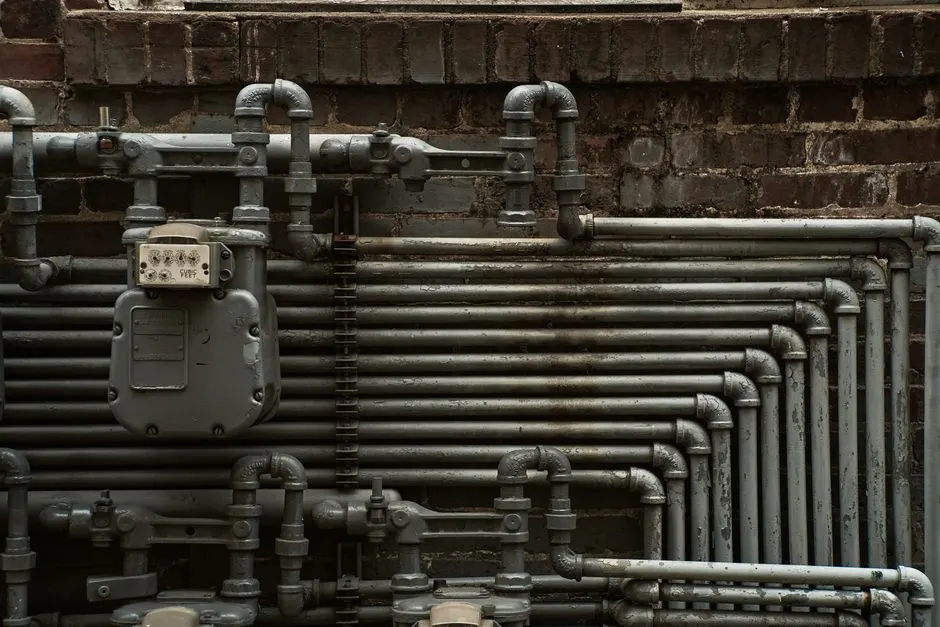
The plumbing issues you should expect in a Littleton historic home are galvanized steel supply lines that have rusted shut, clay or cast iron sewer laterals that crack and root-infiltrate, lead service lines still feeding some pre-1940 houses, undersized drain stacks, and fixtures that were never designed for today's water pressure. Those five problems account for the overwhelming majority of the calls we run in Littleton's older neighborhoods, and each one has a known fix with a known price.
Plumbing issues in historic homes Littleton CO is the category of failures caused by original-era materials - galvanized steel, lead, clay tile, cast iron - that were standard when these houses were built between roughly 1890 and 1955. What follows is what we actually find when we open a wall or camera a line in a Littleton house built before 1960, what it costs to fix in 2026, and how to tell the difference between a repair and a repipe.
Why Littleton's Older Homes Have Predictable Plumbing Problems
Littleton's historic housing stock is concentrated in a handful of neighborhoods, and the plumbing problems track the build year almost exactly. The 1890-1920 blocks around Historic Downtown Littleton and along the older streets near Sterne Park were plumbed in galvanized steel and lead. The 1920-1950 houses spreading toward Ketring Park and the Littleton Town Center generally got galvanized supply and cast iron drains. Post-war construction added copper supply but often kept clay sewer laterals.
That timeline matters because it tells you what to expect before anyone opens a wall. If your house was built before 1960, you are almost certainly dealing with at least two of the five issues below, and probably three. We see this every week across plumbing services Historic Downtown Littleton CO, where the original service lines are still in the ground on a lot of the 1910s and 1920s bungalows.
One more factor: Littleton's water is moderately hard. That accelerates scale buildup inside galvanized and copper lines, which is why a 70-year-old pipe that looks fine from the outside can be 60% closed off on the inside.
Galvanized Steel Supply Lines: The Number One Issue
Galvanized steel supply lines are the single most common plumbing problem in Littleton's pre-1960 homes, and they fail from the inside out. The zinc coating that protected the steel wears away over 40 to 60 years, the bare steel rusts, and the rust flakes off into the water stream while the pipe wall thickens with scale.
What that looks like in your house:
- Brown or yellow tint in the first water out of the tap in the morning
- Pressure that drops noticeably when a second fixture runs
- A metallic taste, especially in hot water
- Pinhole leaks that appear in clusters, not one at a time
- Water that runs slow at the furthest fixture from the meter
Galvanized pipe has a realistic service life of 40 to 70 years. Anything still in service in a Littleton house built before 1965 is on borrowed time. We can patch a pinhole in an afternoon, but when we find three or more leaks in a single line, patching stops making sense - you are paying to maintain a pipe that is failing everywhere at once.
That is when we start talking about repiping Littleton CO. A whole-home repipe replaces every galvanized run with PEX or copper, restores full pressure, and ends the leak cycle. Most Littleton repipes we run take two to four days for a typical 1,200 to 1,800 square foot house.
Clay and Cast Iron Sewer Laterals Under Old Littleton Lots
Clay tile and cast iron sewer laterals are the second big-ticket item in Littleton's older homes, and they fail in ways that are invisible until they are not. Clay tile was the standard lateral material through the 1950s. It is brittle, the joints are mortared and separate over time, and every joint is an entry point for roots.
Littleton's mature trees are the other half of the problem. A 60-year-old silver maple or cottonwood sends roots toward the moisture in a cracked clay joint, and once roots are inside the pipe they act like a sieve. You get slow drains, then gurgling, then a backup in the basement floor drain on a Saturday night.
Cast iron drains inside the house have their own failure mode. Cast iron from the 1920s through the 1950s was hub-and-spigot with oakum and lead joints, and the pipe walls pit from the inside. A camera inspection usually shows channeling along the bottom of horizontal runs - the pipe looks fine on top and is paper-thin underneath.
We run a camera down the line before recommending anything. If the lateral is clay with one or two cracked joints and no root mass, a spot repair or a liner can buy you 15 to 25 more years. If the line is collapsed, bellied, or root-bound along most of its length, sewer line repair Littleton CO means replacement - usually a trenchless pull through the existing path, which saves the lawn and the driveway.
Lead Service Lines and What the 2026 Rules Mean for You
Lead service lines are still present on a meaningful share of Littleton houses built before 1940, and they are the one item on this list with a regulatory clock attached. The EPA's Lead and Copper Rule Improvements set a compliance deadline of November 1, 2027 for water systems to complete their lead service line inventories, with full replacement required over the following decade. That means 2026 and 2027 are the years utilities are actively identifying and notifying affected properties.
How to check your own line in about five minutes:
- Find where the water main enters the house, usually in the basement or crawlspace.
- Look at the pipe before the meter. Lead is dull gray, soft enough to scratch with a key, and does not sound metallic when tapped.
- If it is shiny silver and magnetic, it is galvanized steel. If it is copper-colored, it is copper.
- If you are unsure, call us - we can confirm it on a service call.
If you have a lead service line, the fix is replacement of the full line from the main to the meter. Denver Water and Littleton's water provider both have programs that cover part of the cost on qualifying properties, so it is worth a phone call before you sign anything.
Drain, Vent, and Fixture Problems Specific to Pre-1950 Houses
Drain, vent, and fixture problems in pre-1950 Littleton homes come from the fact that the original plumbing was sized for a house with one bathroom and no dishwasher. A 1.5-inch galvanized drain that was fine for a single lavatory in 1925 is undersized for a modern bathroom with a double vanity, and the vent stack is often too small to keep up.
What we see most often:
- Undersized vent stacks. A 1.25-inch vent where 2-inch is now required causes slow drains and gurgling at every fixture on the branch.
- Galvanized drain lines. These scale shut the same way supply lines do, and snaking only buys a few months.
- Original toilets. Pre-1980 toilets use 3.5 to 7 gallons per flush. A modern 1.28 GPF replacement pays for itself and eliminates the recurring flapper and fill-valve failures that plague old tanks.
- Faucets with no shutoff. Many pre-1950 fixtures have no local shutoff valve, so a simple washer replacement means shutting the whole house down.
If your old toilet is running constantly or your faucet drips no matter what you do, that is a straightforward toilet repair Littleton CO or faucet swap, and it is usually the cheapest plumbing improvement you can make in an old house.
What Does Repiping a Historic Littleton Home Actually Cost?
Typical 2026 pricing for repiping a historic Littleton home runs $4,500 to $12,000 for a full supply repipe, and $8,000 to $25,000 for a sewer lateral replacement, depending on length, access, and whether the walls are open. Those ranges reflect what we actually bill in the 80120, 80121, and 80123 ZIP codes.
Here is how the numbers break down by scope:
- Partial repipe (one bathroom or the kitchen run): $1,800 to $4,000
- Full supply repipe, 1,200-1,800 sq ft: $4,500 to $9,000
- Full supply repipe with fixture replacement: $7,000 to $12,000
- Sewer lateral spot repair: $1,200 to $3,500
- Trenchless sewer lateral replacement: $8,000 to $18,000
- Lead service line replacement: $3,500 to $8,000 before utility credits
Two things move the price more than anything else: how much drywall and plaster has to come out, and whether the sewer line runs under a finished basement floor or a mature tree. Plaster walls in a 1920s bungalow are slower to open and repair than drywall, and that labor shows up in the quote.
We give you the number before we start. One price, one scope, no change orders unless you ask for something different mid-job.
Common Mistakes Homeowners Make With Old House Plumbing
The most expensive mistakes we see in Littleton's older homes are the ones that delay the inevitable. Patching a galvanized line that has already leaked three times is the classic example - you spend $400 to $900 per patch and still end up repiping within two years.
Other mistakes worth avoiding:
- Snaking a root-blocked clay lateral every spring. Snaking cuts roots; it does not remove them. If you are snaking the same line annually, the line needs a camera and probably a liner or replacement.
- Turning up the water pressure to compensate for scale. Raising the PRV to 80 PSI to get better flow through a half-closed galvanized line stresses every fixture and every joint in the house. Keep it at 50 to 60 PSI.
- Mixing copper and galvanized without a dielectric union. Direct metal-to-metal contact between copper and galvanized steel causes galvanic corrosion and eats the steel in a few years.
- Ignoring a slow drain in the basement floor drain. That floor drain is usually the lowest point on the system, and it is the first thing to back up when the lateral is failing.
- Hiring on price alone for a repipe. A repipe is a wall-opening, wall-closing job. The cheapest bid usually means the smallest drywall repair, and you will pay a drywall contractor later to fix it.
If you are in one of the neighborhoods where we do the most old-house work - plumbing services Sterne Park CO is a good example - we can usually tell you within 20 minutes of walking the basement what you are dealing with.
When to Call a Professional
Call a professional when you have three or more pinhole leaks in a single year, when a drain backs up twice in six months, when you see brown water at multiple fixtures, or when you cannot find a shutoff for a leaking fixture. Those are the signals that the problem is systemic, not local.
Small stuff you can handle yourself: replacing a flapper, swapping a showerhead, resetting a garbage disposal. Anything that involves opening a wall, cutting a supply line, or camera-inspecting a sewer is a job for a licensed plumber with the right tools.
Our team at Plumber Littleton CO works on historic homes every week. We will tell you straight whether you need a $300 repair or a $9,000 repipe, and we will show you the camera footage or the cut-out pipe section so you can see it yourself.
Frequently Asked Questions
What plumbing issues are common in Littleton historic homes?
Galvanized steel supply lines that have rusted and scaled shut, clay or cast iron sewer laterals with root intrusion, lead service lines on pre-1940 houses, undersized vent stacks, and original fixtures with no local shutoffs. Most pre-1960 Littleton homes have at least two of these five issues.
Should I repipe my historic Littleton home?
Yes, if you have had three or more leaks in a single year, if pressure drops when a second fixture runs, or if you see rust-colored water at multiple taps. A full repipe runs $4,500 to $12,000 in 2026 and takes two to four days for a typical 1,200-1,800 sq ft house.
How do I update plumbing in an old Littleton house?
Start with a camera inspection of the sewer lateral and a pressure test on the supply lines. Then prioritize: lead service line first if present, then galvanized supply, then the lateral. Fixtures and shutoff valves come last. We sequence it so you are not opening the same wall twice.
Who fixes plumbing in historic Littleton homes?
A licensed plumbing contractor who works on pre-1960 housing regularly and knows how to open plaster without destroying it. We handle galvanized replacement, clay lateral repair, lead line replacement, and fixture updates on Littleton's older homes.
How long do galvanized pipes last in a Littleton house?
Forty to seventy years. Littleton's moderately hard water accelerates scale buildup, so most galvanized lines installed before 1965 are already past their service life. If yours is still in service, plan for replacement rather than waiting for a failure.
Get Help With Plumbing Littleton CO in Littleton
If you own a pre-1960 house in Littleton, we will walk the basement, camera the lateral, and give you a straight answer on what needs fixing now and what can wait. Call +1 (831) 293-1204 to schedule a visit.